
Biometrics in Law Enforcement: Fingerprints, DNA and Face Recognition in Policing
Biometrics in law enforcement began with ink and paper fingerprint cards more than a century ago. Today police search fingerprints, DNA and faces across databases holding millions of records. The tools solve crimes that would once have gone cold, and they have also put innocent people in handcuffs.
What is biometrics in criminal justice?
In criminal justice, biometrics means using fingerprints, DNA, face images, iris scans and voice to identify suspects, victims and offenders. It runs from booking at a police station to evidence presented in court.
What is biometric evidence?
Biometric evidence is a trace of a person’s body linked to a crime, such as a fingerprint on a window, DNA on a weapon or a face on CCTV. It points to a person only after it is compared with a known sample or a database.
Why does it matter?
It can identify an offender from a tiny trace, and it has freed people who were wrongly convicted. Errors and misuse can also do serious harm, so how police use it is a question for law and courts, not only technology.
How Biometric Evidence Moves From Crime Scene to Court
The databases are huge. The FBI’s identification system held more than 87 million criminal fingerprint records in April 2025. The US national DNA index held more than 14 million convicted offender profiles by mid-2020.
A database search does not prove guilt. It produces candidates, and a human expert then compares the evidence. Courts expect that work to be documented and open to challenge.
Biometrics in Policing: The Main Tools
| Tool | What it does | Main concern |
|---|---|---|
| Fingerprints (AFIS) | Matches prints from scenes and bookings | Partial prints and examiner error |
| DNA databases | Links crime scene DNA to known profiles | Who is kept in the database, and for how long |
| Face recognition | Searches photos or live video for suspects | False matches, bias, mass surveillance |
| Iris scans | Identifies people at booking and in prisons | Database sharing |
| Voice analysis | Compares recorded voices | Low reliability in court |
Fingerprints and DNA have the longest record in court. Face recognition is the newest and most disputed, especially when used live on crowds.
Read the full guide
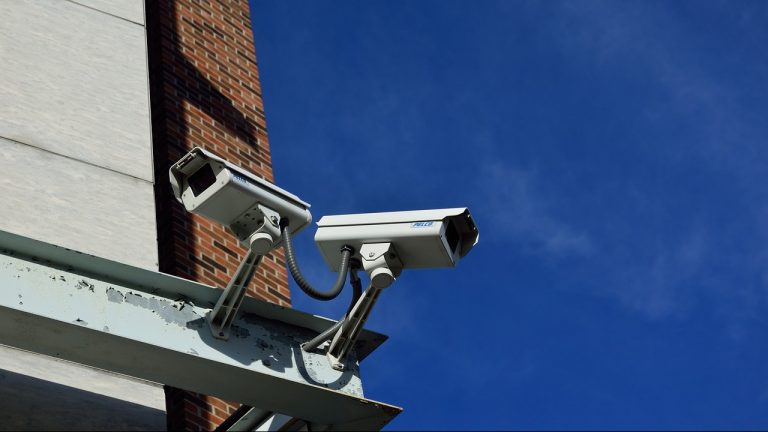
How CCTV Face Recognition Facilitate the Surveillance System
How CCTV face recognition works in surveillance systems.
When Biometric Evidence Gets It Wrong
Even fingerprints can mislead. In 2004 the FBI wrongly linked a lawyer in Oregon to a print from the Madrid train bombings. A Justice Department review blamed an unusually similar print and examiners who did not question their first conclusion.
Face recognition has caused wrongful arrests too. In Detroit, police arrested Robert Williams after a face search pointed to him. The city later agreed to a landmark settlement that limits how its police can use the technology.
These cases changed practice. Labs added independent checks, and some police forces now bar arrests based on a face match alone.
Who Sets the Rules?
Rules differ sharply by country. The EU’s AI Act largely bans police from live face scanning in public spaces, with narrow exceptions such as searching for a missing child or preventing a terror attack.
The UK announced in November 2026 that it plans a specific law and an independent oversight body for police facial recognition, with bias testing required. In the US, there is no federal law, and rules vary by state and city.
Read the details in our news report on the UK plan.
Questions Still Open
Should police keep the DNA or fingerprints of people never charged? Is live face scanning at a protest ever justified? And how should a jury weigh a match that rests on software and one expert’s judgment?
Explore law enforcement biometrics
FAQ
How do police use biometrics?
Police take fingerprints, photos and sometimes DNA at booking, search crime scene traces against databases, and in some places use face recognition on images or live video.
Is fingerprint evidence always reliable?
It is very reliable when experts follow strict checks, but not perfect. A large 2011 study found examiners made false matches in about 0.1% of comparisons and missed true matches more often.
Can police use facial recognition without a warrant?
It depends on the country and state. Some places require a warrant or limit use to serious crimes; others have no specific rules yet.
Can my DNA or fingerprints be removed from a police database?
Many countries allow removal if you were not charged or were acquitted, but the process and timelines differ. Check the rules where your record was taken.
Latest law enforcement news
Law enforcement guides and explainers

Related topics
References
- FBI, Next Generation Identification (NGI) System Fact Sheet, April 2025
- Rhode Island Department of Health, DNA/CODIS testing, 2020
- US Department of Justice, Office of the Inspector General, A Review of the FBI’s Handling of the Brandon Mayfield Case, March 2006
- Michigan Public, Wrongful facial recognition arrest leads to landmark settlement, June 2024
- UK Home Office, Stronger laws for police using facial recognition technology, November 2026
- PNAS (Ulery et al.), Accuracy and reliability of forensic latent fingerprint decisions, 2011
